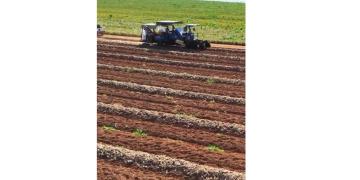
Mexico implements regenerative agriculture techniques in potato cultivation, managing to reduce the use of agrochemicals by up to 20%.
In Mexico, the implementation of innovative technologies in potato cultivation, combined with regenerative agriculture practices, has allowed for a reduction of up to 20% in the use of agrochemicals.
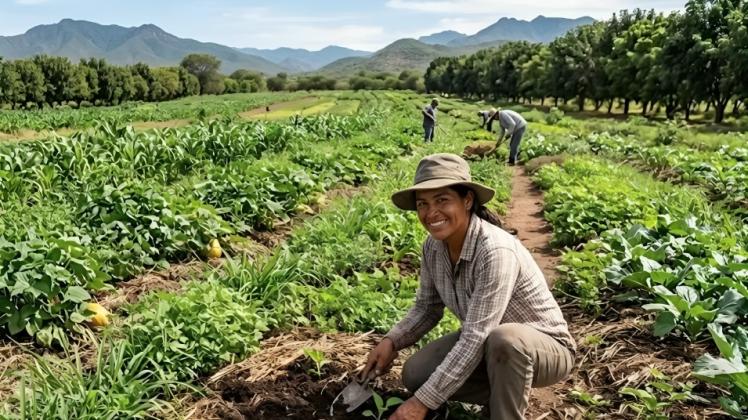
The modernization of irrigation and the implementation of regenerative farming practices are becoming key strategies for mitigating energy consumption in Sinaloa’s agricultural sector. Producers and specialists emphasize that efficient water management, combined with soil restoration, helps reduce the use of fuel, fertilizers, and machinery—elements that directly impact production costs.
One of the cornerstones of this transformation is the modernization of Irrigation District 010 in Culiacán, part of the National Irrigation Technology Program. This project aims to optimize the hydraulic infrastructure by improving conveyance networks, intakes, and main canals that connect to agricultural plots. These actions seek to minimize water losses and increase the sector’s productivity. Researchers from the Center for Research in Food and Development (CIAD) are providing technical support for the program’s development.
Miguel Ángel Angulo Escalante, a senior researcher at CIAD, explained during the project presentation that the main goal is to increase agricultural productivity by using water more efficiently and sustainably. This includes providing technical training to stakeholders in the sector and recovering significant volumes of water to maximize productivity per cubic meter used. He also emphasized that the agricultural sector is the largest consumer of water in the country, so optimizing its use could generate benefits for other areas: helping farmers manage water efficiently not only strengthens agricultural sustainability but also that of other economic activities.
The modernization of irrigation is already showing its positive impact on production. In the 1990s, yields of eight to nine tons of corn per hectare were obtained using six to seven irrigations; today, thanks to the integration of advanced technologies and improved water management practices, yields of up to 12 tons can be achieved with only three or four applications. Among the project’s most notable initiatives is the lining of approximately 40 kilometers of a main canal located on the right bank of the Culiacán River. This infrastructure will allow for the recovery of nearly 40 million cubic meters of water that are currently lost to evaporation and seepage during its transport to the fields, according to information provided by the National Water Commission (Conagua).
The benefits of more efficient water use include both reduced energy demand and lower fuel consumption for pumping and transporting water. Experts from CIAD and data from the Ministry of Agriculture and Rural Development (SADER) confirm that these improvements could significantly decrease the energy expenditure involved in agricultural irrigation systems.
The adoption of sustainable agricultural practices also responds to international environmental commitments. Mexico, as a signatory to the Paris Agreement and in line with data presented by the Food and Agriculture Organization of the United Nations (FAO), has set a goal of reducing its greenhouse gas emissions by 22 percent by 2030.
Currently, agriculture generates approximately 12 percent of Mexico’s greenhouse gas emissions, while industry contributes about 17 percent, according to the National Institute of Ecology and Climate Change (INECC). The Ministry of Environment and Natural Resources (Semarnat) warns that many agricultural soils in Sinaloa have low levels of organic matter, below 1.8 percent, in addition to problems such as erosion, compaction, and salinity. These factors directly affect productivity and reinforce the urgent need to shift toward more sustainable agricultural models to ensure a viable future in both economic and environmental terms.
Alexia Vega is a prominent journalist specializing in issues related to the productive sector, with a particular focus on agriculture, fishing, industry, commerce, and tourism within the state of Sinaloa. She holds a degree in Communication Sciences from the Autonomous University of Sinaloa (UAS), where she specialized in media. During her university years, she gained professional experience working with a radio station, which marked a solid start to her journalistic career. She then honed her skills through a year-long internship at the station before dedicating herself fully to journalism focused on regional issues. She began her professional career in 2024 covering local affairs and economic development, until joining the editorial team of the newspaper El Debate on June 23, 2025, where she continues to contribute reports and analyses focused on areas crucial to the state’s progress.
Fuente: debate.com.mx