Costa Rica: Agreement with Chinese universities for applied research and knowledge transfer in potato cultivation.
The visit by a delegation from Qinghai University and Yunnan Agricultural University is focused on academic exchange, technological advancement, and the implementation of joint projects.
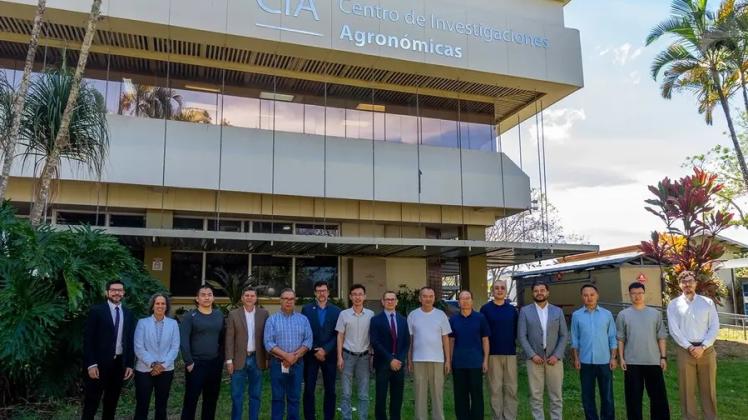
The Center for Agronomic Research (CIA) at the University of Costa Rica recently hosted an academic delegation from Qinghai University and Yunnan Agricultural University in China. The purpose of this visit was to strengthen international ties in agricultural research, with an emphasis on potato cultivation, considered an essential food for global food security.
During the meeting, both institutions participated in an academic and scientific exchange, sharing advancements, capabilities, and potential areas of collaboration. Dr. Luis Mora Rodríguez, head of the Office of International Affairs and External Cooperation (OAICE), highlighted the importance of these partnerships for promoting technological development and generating innovative solutions in the agri-food sector. He also emphasized the relevance of internationalization and the creation of collaborative networks to broaden the impact of research.
Dr. Jian Wang, vice president of the Academy of Agricultural and Forestry Sciences at Qinghai University, noted that technological cooperation accelerates progress in areas such as potato cultivation, enabling reduced production costs and the development of varieties better suited to local needs. Qinghai University has expertise in genetics, seed production, and germplasm evaluation under the unique conditions of the Chinese highlands. These conditions include factors such as altitude, solar radiation, and temperature variations, which contribute to the development of high-quality seeds and varieties.
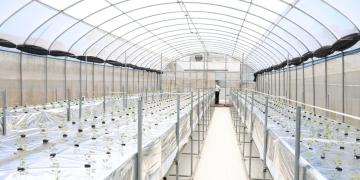
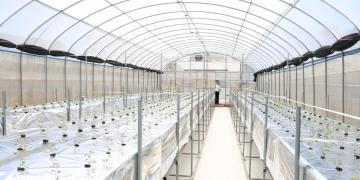
Among their contributions, the development of integrated genetic improvement systems stands out, encompassing greenhouses, propagation in alpine zones, and selection in diverse ecological regions. These techniques have yielded varieties that are more resistant to disease, offer higher yields, and are better adapted to adverse environments. Furthermore, they maintain a valuable germplasm bank with over a thousand potato accessions from various countries, promoting the study of genetic diversity and crop adaptation.
On behalf of the CIA, Dr. Mario Villatoro presented the center’s capabilities in areas such as plant biotechnology, agricultural microbiology, soil fertility, natural resources, and post-harvest technology. These fields are focused on generating practical solutions that benefit both producers and the agro-industrial sector through applied research and knowledge transfer.
One of the most significant outcomes of the meeting was the intention to establish joint projects focused on the genetic improvement of potatoes. According to Dr. Arturo Brenes Angulo, coordinator of the Plant Biotechnology Laboratory, some priority areas include the identification of genes resistant to pests, diseases, and the effects of climate change. Furthermore, plans are underway to promote academic and student exchanges to facilitate internships, postgraduate studies, and specialized training in both countries.
Potato cultivation offers a strategic opportunity to optimize agricultural productivity and reduce costs through the adoption of innovative technologies. International experience demonstrates that improvements in seeds, farming systems, and mechanization can transform the profitability and sustainability of the sector.
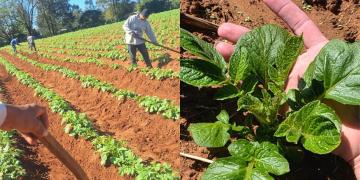
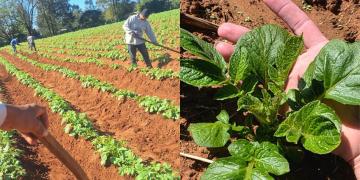
As part of the Chinese delegation’s itinerary, visits were made to farms located in the cantons of Alvarado and Oreamuno, Cartago. In these locations, the CIA’s Plant Biotechnology Laboratory is conducting trials with materials developed within its genetic improvement program focused on potatoes.
Within this framework, the collaboration between UCR, Qinghai University, and Yunnan Agricultural University aims not only to advance agricultural research but also to ensure that the results reach the fields directly. This contributes to the well-being of local producers and rural communities.
This type of initiative positions the University of Costa Rica as a central player in the generation of innovative knowledge and in the strengthening of international networks to face global challenges such as climate change and food security.
Fuente: ucr.ac.cr