Spain: Álava will begin cultivating a ’super potato’ intended for seed, which will also have a designation of origin.
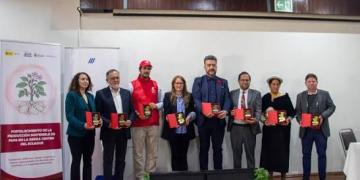
The Basque Country’s Department of Agriculture, in collaboration with the Provincial Council, has launched a plan valued at 9.3 million euros to promote a significant transformation in the crop sector.
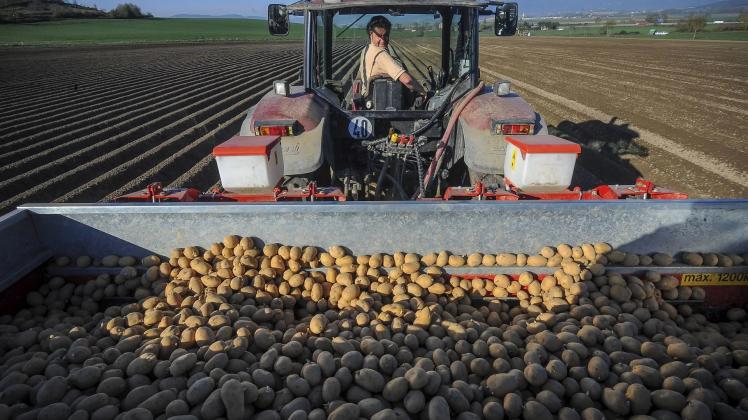
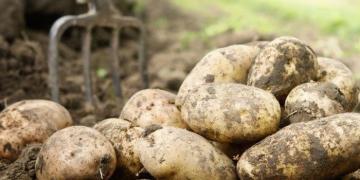
rom 5,500 to 8,250 tons per year. Álava has set itself the goal of increasing its seed potato production by 50% to once again become a national leader in the harvest of the tuber from which the best table potatoes grow. To this end, the Basque Government has just launched an ambitious plan that proposes an investment of nearly €9.3 million by 2030, a significant portion of which will come from the funds of the Álava Provincial Council.
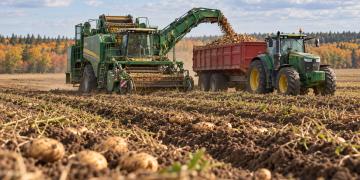
The measures focus primarily on R&D&I – research, development, and innovation – with the establishment of experimental farms where farmers will learn new production techniques and the provision of subsidies for modernizing farms by incorporating cutting-edge technologies. The aim of all this is to improve the quality of the harvest in order to be more competitive against countries like the Netherlands, France, and Germany, which currently dominate the market.
In this regard, the Department of Agriculture, headed by Councilor Amaia Barredo (PNV), has also proposed creating a Protected Designation of Origin (PDO) for Álava Potatoes so that the local tuber is perceived as the "first choice" both in the territory and in third markets compared to those other massive imports.
The large cooperatives that make up the sector in Álava support the plan, which also places great emphasis on generational renewal as one of the keys to increasing potato production. However, small farmers fear they will not benefit from these initiatives and subsidies, "despite being the ones who directly assume the production risk in the fields," as stated by the UAGA union and the family business SAT San Vitor, located in Gauna.
To "revitalize" cultivation in the region, Barredo points out that it is essential for farmers to "learn to produce" with "specific training." This means they need to be able to use 100% Basque seed in their fields, instead of buying it, and they will have the support of the Basque Institute for Agricultural Research and Development, Neiker. In fact, their objectives include reaching a quarter of production from their own varieties by 2030.
Article full: argenpapa.com.ar/noticia/17127-
Fuente: elcorreo.com