Spain (Castilla y León): The potato season begins marked by uncertainty.
Sowing season begins in the region with the sector focused on farmgate prices, rising production costs, and the need for effective planning.
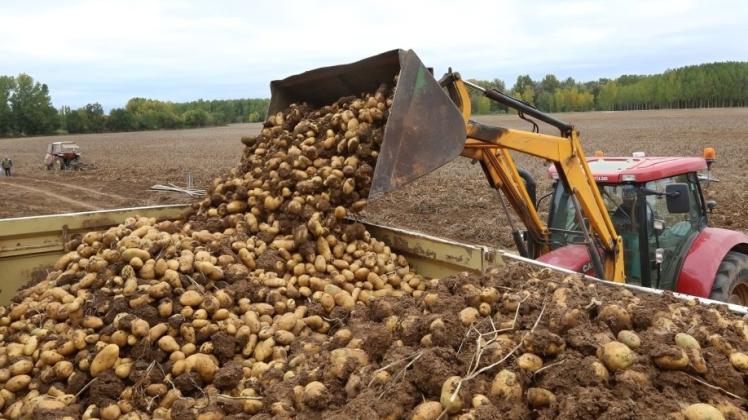
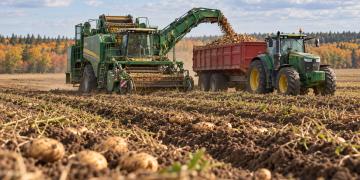
With the arrival of spring, the irrigated fields of Castile and León are once again bustling with activity as potato planting begins, one of the region’s most emblematic and strategic crops. However, this new agricultural cycle begins marked by an atmosphere of uncertainty, concern, and caution among producers, following a previous season in which profitability was once again called into question.
The combination of low farmgate prices, a sustained increase in production costs, and import pressure has once again placed the potato sector in a complex situation. In a region that leads national production, the debate no longer revolves solely around production capacity, but also around the need to regulate the market and guarantee prices that ensure the continued cultivation of potatoes.
See moreInsurance for agricultural cropsPotato storage equipmentAdvertising on PortalPotato MarketsPapa ClassifiedsPotato MarketResolutions and RegulationsInternational PricesAgricultural work clothesBooks on potato cultivationCastilla y León accounts for approximately 44% of Spain’s potato production and maintains a cultivated area of around 19,000 hectares, making it the leading producing region in both volume and area. Provinces such as Valladolid, Salamanca, Zamora, León, and Burgos contribute significantly to this leadership, with potatoes remaining a key crop for the economy of many irrigated farms.
This significant influence carries added responsibility, as any planting decision made within the region has a direct impact on the entire national market. However, leading the way in production does not always translate into economic stability for farmers, a reality that is once again evident at the start of this new season.
Alberto Duque, president of the Interprofessional Potato Association, recalls that last season saw an increase in planted area of nearly 10%, an increase that ultimately did not translate into greater profitability for farmers. "This increase in planted area was not significant in economic terms, because there were also production losses and marketing problems," he points out.
One of the factors that, in Duque’s opinion, has decisively shaped the market has been the influx of potatoes from abroad. "They stopped buying domestic produce and brought potatoes directly from France when Spanish potatoes were still available," he complains, a situation that has resulted in some growing regions still having stockpiles.
This dynamic, he adds, has had a direct impact on product distribution and price formation at the source. "When potatoes from abroad enter the market before domestic production has been exhausted, the market freezes and farmers lose their bargaining power," he summarizes.
Duque also focuses on the price difference between farmers and consumers, a gap he considers structural. "Farmers are the only link in the chain legally obligated to declare their costs and sign contracts, while the rest of the chain provides no information about their profit margins," he criticizes.
In his view, this lack of transparency hinders the effective implementation of the Food Chain Law. "Consumers know what they pay and farmers know what they receive, but everything in between remains opaque," he states, calling for greater government involvement in monitoring the value chain.
See morePotatoesWeather for PapaAgronomic consulting servicesFertilizers for potato cropsSolanum tuberosumCultivation techniques coursesTrucks for transporting potatoesAdvertising on PortalCertified potato seedsWholesale potato bagsCoag also warns of the unequal playing field between domestic and imported potatoes. "We’re not playing on a level playing field," Duque points out, referring to the differences in labor costs, environmental requirements, and the use of pesticides in other producing countries.
In this regard, he questions the effectiveness of controls on the traceability and origin of imported products. "Checks are done randomly, but there is no real control to guarantee that the same standards required here are being met," he argues, warning of what he considers unfair competition.
Despite these difficulties, Duque emphasizes the strategic role of Castile and León within the sector as a whole. "We are leaders in production, and that should help us organize ourselves better and set the rules of the game," he states, convinced that the region’s strength has not always been properly utilized.
Avoid imbalances
COAG insists on the need for better planning of planting campaigns. "You can’t plant everything at once or rely solely on early varieties; you have to scale up production and adjust supply to what can actually be sold," they argue.
Duque also warns against the proliferation of new brands or projects without a clear commercial path. "We can’t get involved in ventures that then have no market and end up driving prices down," he cautions, advocating for a more prudent and coordinated strategy.
In this context, the Coag representative considers it crucial to strengthen the sector’s organizational tools. "The Interprofessional Association must serve to organize, anticipate, and provide stability, not just to analyze what has already happened," he points out.
Finally, Duque calls for a greater commitment from public administrations. "The potato is a strategic crop, it generates wealth and employment in rural areas, and it cannot be left at the mercy of the market without clear rules," he argues.
With planting already underway and many questions still unanswered, the sector is approaching the coming months with caution. For COAG, the future of potatoes in Castile and León depends on a combination of planning, import controls, transparency throughout the supply chain, and a strong defense of domestic produce that allows farmers to work with a minimum guarantee of profitability.
See morePotato storage equipmentPope’s QuoteAgronomic consulting servicesResolutions and RegulationsPotato market researchPotato ConsumptionpotatoTrips to agricultural fairsPotato PricesPost-harvest handling coursesFrom Asaja Castilla y León, its president, Donaciano Dujo, has a clear and unambiguous assessment of the previous year. "We’ve had our ups and downs, but the reality is that prices have been low, costs have risen, and many farms have operated at a loss; there has been no profitability," he states.
Dujo explains that, although prices experienced slight increases at certain points during the season, these were not enough to offset the sharp rise in production costs. "The problem is that producing potatoes today is much more expensive, and if producers aren’t paid adequately, the crop ceases to be profitable," he warns.
The cost per hectare easily exceeds 10,000 euros, a figure that decisively conditions the economic viability of the crop and forces farmers to make increasingly measured decisions.
Aurelio González, representative of UPA, agrees with the assessment and acknowledges that farmers are approaching the start of the season with caution. "It’s a complex start, because last year’s market was very difficult and now there are fewer options," he points out.
Volatility
González points out that potatoes have never been a particularly stable crop. "There have always been good years and bad years, and this season is once again marked by uncertainty and low prices," he explains, especially in some producing areas where certain varieties haven’t sold as well as expected.
One of the most pressing concerns for the sector is the increase in production costs, which has become a structural factor. "Seeds, pesticides, fertilizers, energy, and water have all risen significantly, and all of this is causing costs to skyrocket," Donaciano Dujo explains.
Aurelio González highlights seed potatoes as one of the main problems. "We continue to have problems with seed potatoes; there’s a shortage, and that severely limits farmers," he warns. Added to this is the cost of energy, which affects both irrigation and product preservation. "The problem is that the first few kilos harvested often go directly to covering expenses," González laments, a situation that reflects the difficulty of generating profit margins even in seasons with acceptable yields.
Given this context, the sector is facing the new season with a more conservative approach. Forecasts point to a planted area of around 19,000 hectares in Castile and León, a figure similar to recent years, but reflecting an adjustment driven by a lack of profitability.
"The estimate is that there will have to be a reduction in planting," says Donaciano Dujo, although he insists that this adjustment is not due to a lack of productive potential. "Spain imports a large quantity of potatoes, and if the market were well regulated, there would be no need to reduce planting," he emphasizes.
From UPA, Aurelio González explains that some farmers are choosing to rethink their crops. "There are producers who switch from one crop to another depending on how the previous season went," he says, although he acknowledges that not all have the capacity to diversify due to the structure of their farms.
Agricultural organizations agree that imports are one of the main factors distorting the market. "We will always denounce the importation of potatoes from abroad when local potatoes aren’t being paid for, and knowing that they often arrive in poor condition," says Dujo.
Aurelio González shares this concern and warns that the influx of imported potatoes has a direct effect on farmgate prices. "Imports clearly influence the market and put downward pressure on prices," he maintains, especially when they coincide with the marketing of domestic production. Although control mechanisms exist, agricultural representatives believe that oversight should be strengthened throughout the entire supply chain, including distribution.
See morePope NewsPapa ClassifiedsBooks on potato cultivationWholesale potato bagsProduction InformationPotato ConsumptionResolutions and RegulationsCentral Market of Buenos AiresPotato MarketsEfficient irrigation equipmentIn this context, the Interprofessional Potato Organization of Castilla y León (Oipacyl) takes on special relevance, conceived as a tool to improve the coordination of the sector and bring stability to the market.
From UPA, Aurelio González believes that Castile and León’s leading role in potato production has not always been managed properly. "I think it’s not being managed well and that the sector needs more regulation to give it stability, because potatoes have always been a very risky crop," he states.
Regulation
González points to the Interprofessional Association as a necessary tool, although he believes its role should be strengthened. "We need more planning and more stability, because farmers can no longer bear all the risk," he adds.
Along these lines, he calls for the creation of cost observatories. "We ask that cost observatories be created and that their findings be published regularly, so that no one can sell below those costs," he argues, in line with the principles established by the Food Chain Law.
The price gap between farm gate and retail prices has once again become a major concern for the sector. Potatoes are typically among the products with the highest profit margins from farm to consumer, a situation that is difficult to manage given the current high costs.
Agricultural organizations insist that without prices that cover production costs it is not possible to maintain the crop in the medium and long term, and they demand greater control of commercial practices.
Despite the challenges, the sector emphasizes the quality of potatoes from Castile and León. "We have a good product," asserts Donaciano Dujo, who insists on the need for clear identification of origin at points of sale. "There has to be clear identification of the potato, its origin, and all its characteristics," he stresses.
Asaja also advocates for the widespread use of guaranteed purchase agreements. "We support contracts with guarantees and fair prices," Dujo emphasizes, convinced that the sector’s stability depends on a more equitable distribution of value.
Looking ahead, the president of Asaja acknowledges that the room for maneuver is limited. "We have few opportunities, but let’s hope so, because there aren’t profitable prices abroad either," he concludes.
With planting underway, the potato sector in Castile and León faces a crucial season. Market trends, import controls, and the role of the Interprofessional Association will be key to ensuring farmers can continue planting.
Fuente: diariodecastillayleon.es