Canada: The potato vine crusher poised to help farmers grind weeds to a halt
In 2021, Agriculture and Agri-Food Canada (AAFC) research scientist Dr. Andrew McKenzie-Gopsill dusted off equipment invented 10 years prior by an AAFC colleague to repurpose it for a new idea in weed science called harvest weed seed control.
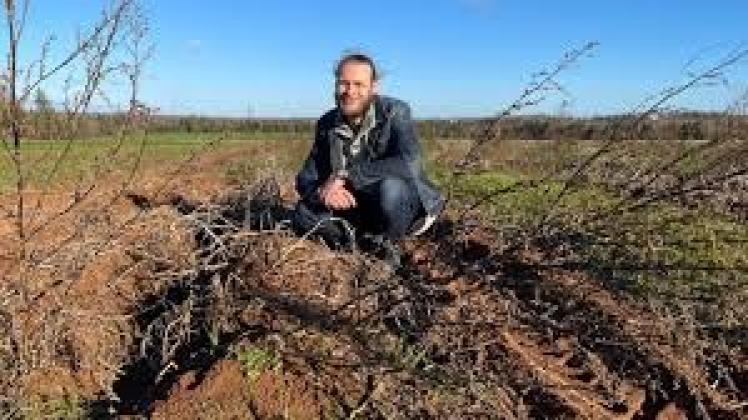
“Harvest weed seed control is when, during harvest, instead of returning weed seeds back to the field so they grow to become weeds, the weed seeds are harvested by removing them from the field completely or destroying them directly in the field.”
- Dr. Andrew McKenzie-Gopsill, research scientist, Agriculture and Agri-Food Canada
The equipment, called the potato vine crusher, includes 2 metal rollers, attached to a motor, and speed regulator running from a 10-horsepower generator. Designed by Dr. Christine Noronha, it attaches to the back of a potato harvester to crush potato vines, killing European corn borer larvae within the vine, a pest in several crops, including potato.
Potato vine crusher reborn to crush weed seeds
Dr. McKenzie-Gopsill used the potato vine crusher at the AAFC Harrington Research Farm on Prince Edward Island to test its ability to destroy weed seeds during a simulated potato harvest. To simulate harvest conditions, he collected potato plants from the field, added common weed seeds found in potato crops, and manually fed the mixture through the vine crusher. The crushed weed seeds were then tested for germination, the ability of the seeds to develop into plants, in controlled lab conditions in petri dishes and in soil, similar to real field conditions.
When he completed his initial research in 2022, he found that germination of certain weed seeds was reduced by 60% to 95% in the petri dishes. The soil tests showed that germination of lambsquarter and pigweed reduced by 50%, while other larger weed seed species reduced by 50% to 75%.
His discovery was the first ever application of a mechanical harvest weed seed control technology for a horticulture crop – a potential crushing blow to weeds. But how would it fare in real-world field conditions?
Crushing the weed competition
In 2023, Nicolle MacDonald, a biologist with the AAFC Pest Management Centre’s Pesticide Risk Reduction Program, partnered with Dr. McKenzie-Gopsill to test how well the equipment could crush weed seeds in a real potato harvest setting. The Pesticide Risk Reduction Program focuses on developing and implementing reduced risk solutions for pest management issues, including alternative pest management tools and practices like the potato vine crusher. This Program funded Dr. Noronha’s initial project leading to the development of the potato vine crusher.
To test the potato vine crusher for harvest weed seed control in real farm fields, the research team attached it to a conventional potato harvester. During harvest, Nicolle dropped mesh bags containing weed seeds, such as volunteer canola, barnyard grass, lambsquarters, redroot pigweed, and corn spurry into the crusher. The mesh bags allowed the team to expose a known group of seeds to similar conditions as other seeds that would pass through the crusher during a regular harvest. After harvest, the mesh bags were anchored on or just below the soil surface to prevent movement. Some were left in place for several weeks, while others remained through the winter, to compare the effects on germination.
The mesh bags collected in the fall, during the weeks following harvest, were found to have reduced germination, or seed viability. The viability is how likely it is that a weed seed will grow into a plant in the field.
“When we bring research like this from controlled scenarios to more unpredictable real-life environments, successful results are not always guaranteed. Fortunately, we had great results in reducing viability of the different weed seeds we tested in field conditions. Viability was more affected in some species than others. In volunteer canola and barnyard grass, we were able to reduce seed viability after harvest in the fall by over 20%.”
- Nicolle MacDonald, biologist, Agriculture and Agri-Food Canada
In the fall, volunteer canola seed germination was reduced by 26% with the potato vine crusher. This was followed by barnyard grass at 21%, lambsquarters at 14%, redroot pigweed at 13%, and corn spurry weed seeds at less than 1%, confirming that the potato vine crusher can effectively destroy weed seeds during potato harvest. In the spring, although less pronounced, researchers still saw a reduction in seed viability.
“We were really excited to see the clear effect the potato vine crusher had in the field compared to other known harvest weed seed control tools. The crusher provides an effective tool for harvest weed seed control in a horticultural crop and an important result for Canadian farmers.”
- Dr. Andrew McKenzie-Gopsill, research scientist, Agriculture and Agri-Food Canada
A long-term strategy for farmers
Dr. McKenzie-Gopsill explained that the potato vine crusher is especially important in a time where more weed species are becoming increasingly resistant to herbicides.
“The equipment is another valuable tool for farmers to use in their integrated weed management strategy. Over the long term, when weed seeds cannot germinate, farmers will see a reduction in the seed bank resulting in fewer weeds over time.”
AAFC researchers gave an old invention, first designed to crush insect larvae, a second use by turning it into a viable solution for reducing weeds in horticultural crops. Now, the weed seed crusher is poised to get more farmers on the winning side in the battle against weeds.
Key benefits and discoveries
- After successfully demonstrating the effectiveness of the potato vine crusher in reducing germination of common weed seeds found in potato crops in a controlled petri dish environment, AAFC researchers tested the equipment in real field harvest conditions.
- To test the potato vine crusher in the field, the team attached it to a conventional potato harvester. During harvest mesh bags containing weed seeds, such as volunteer canola, barnyard grass, lambsquarters, redroot pigweed, and corn spurry, were dropped into the crusher.
- Researchers found that the crusher reduced seed viability, how likely the weed seed is to grow into a plant in the field, confirming that the potato vine crusher can effectively crush weed seeds during potato harvest.
- Volunteer canola weed seed germination was reduced by 26% with the potato vine crusher. This was followed by barnyard grass at 21%, lambsquarters at 14%, redroot pigweed at 13% and corn spurry seeds at less than 1%.
- Results of the study with the potato vine crusher are especially important in a time where more weeds are becoming increasingly resistant to herbicides. Over the long term, when weed seeds cannot germinate, farmers will see a reduction in the seed bank resulting in fewer weeds over time.
Fuente: agriculture.canada.ca