Verticillium: Crop rotation, soil-building offer resilience against potato early dying
Research shows no fumigation impact on verticillium population after first year
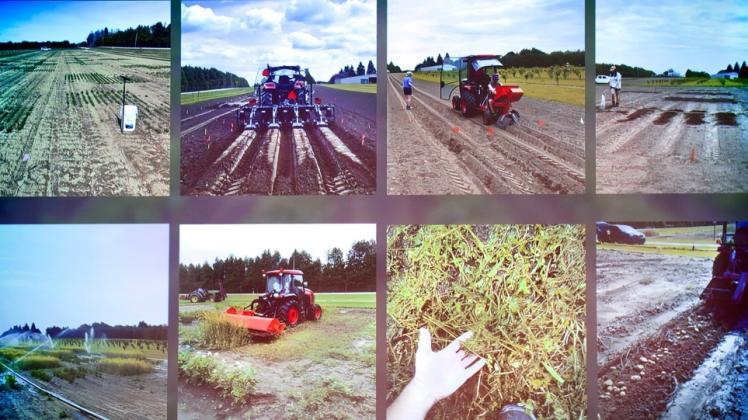
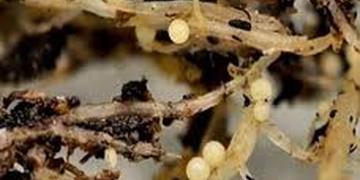
Potato early dying (PED) complex happens when the fungus verticillium dahliae and the root-lesion nematode pratylenchus penetrans act together, lowering potato yields.
“If you’re looking at your field and thinking, what the heck’s going on and you know it’s not fertility, it’s not moisture or topography, but you’re seeing kind of dead patches late in the season. Chances are it’s probably PED.” said Griffin Bailey, Little Potato Company’s regional agronomist for Eastern Canada.
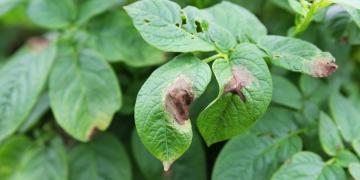
Verticillium alone causes leaves to curl and change colour, leading to plant decline. But when the nematode is also present, the problem worsens significantly, Bailey told Ontario Potato Conference attendees in Guelph on March 5.
“The verticillium has to work pretty hard to infect the root on its own. If the nematode is there, feeding and creating an open wound, it’s kind of like opening the door for the verticillium,” he explained. “And infection happens a lot faster, a lot more readily, and the damage can be a lot more severe.”
Infection starts at the root and moves up, with symptoms appearing after flowering, causing the lower leaves to yellow, brown and die. A key indicator is that one side of the leaf, or the whole plant, wilts and browns while the other half remains green and healthy. The plant can also appear to wilt during the day and recover at night, or show flagging, where the plant remains upright despite being dead.
Non-visual symptoms that occur beforehand include reduced photosynthesis and transpiration, and increased leaf surface temperature.
Full news article: farmtario.com/crops/crop-rotation-soil-building-offer-resilience-against-potato-early-dying/Fuente: farmtario.com