Argentina (Mendoza): "In recent years, the export of potato chips has displaced that of grape must."
Carlos Marfil, a researcher at INTA, is the coordinator of a publication that reviews the origin, current status and recipes of Andean potatoes and quinoa.
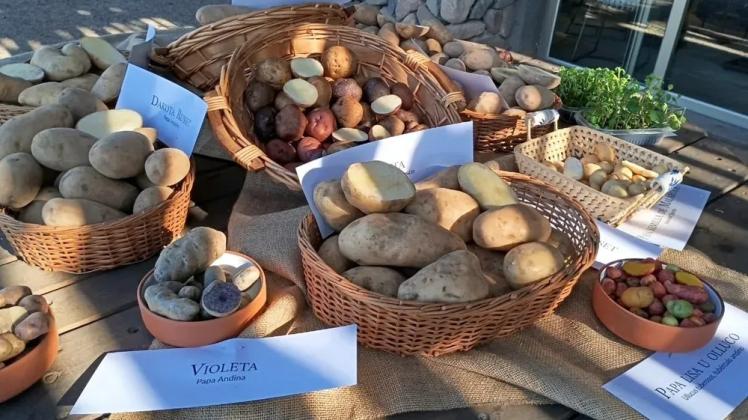
In just over 200 pages, this work published by Ediunc brings together the experiences and perspectives of scientists from various disciplines —mainly agronomy, economics, biology and biotechnology—, along with those of rural producers and chefs.
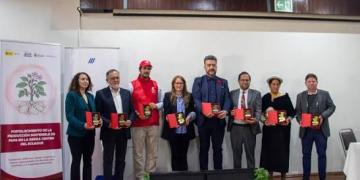
The idea for a book wasn’t initially planned. However, these kinds of gatherings tend to generate unexpected synergies, and the publishing project emerged from one of them. During the event, a spirit of camaraderie prevailed among the participants, which led me to propose compiling a publication that reflected the experiences shared by each of us. Ediunc, the publishing house of the National University of Cuyo, organizes annual calls for submissions to evaluate publication proposals. I explained to the authors that there was a certain degree of uncertainty, since submitting a work didn’t guarantee its publication. Fortunately, everything turned out as expected.—Is it a scientific publication or more for the general public?
—One of the wonderful things about the book is that it brings together the experiences of scientists, technologists, entrepreneurs, businesspeople, and cooks. I stepped away a bit from my traditional work, which has always been within the scientific field, and asked the authors not to format it like a scientific article.
Each chapter is designed to reach a wider audience, potential producers who might be interested, and entrepreneurs who want to work on these topics. Perfect.
—And why did you choose the Andean potato and quinoa?
—Because those were the topics that INTA was working on in the Cuyo region. And from there it became linked with Casa Vigil, to organize a technical gastronomic meeting that took place over two days: one at INTA, where it was a technical workshop, from which the 12 chapters of the book emerged, from scientists, technologists, entrepreneurs, businesspeople.
And then, the following day, there was a food fair, which also featured cooks and chefs from different parts of Argentina and South America. I also invited the cooks through Iván Azar, the chef at Casa Vigil, who coordinated the collection of the recipes they had prepared at the event. That’s part of the final section.
—Since this meeting in 2023, how have these two crops evolved in the province?
—In the case of Andean potatoes, progress has been made, interest has grown, and the INTA improvement program has also expanded. As for quinoa, San Juan continues to lead regional production, while in Mendoza it hasn’t taken off much. The bottleneck remains the post-harvest handling of the grain (it requires saponin removal and, often, milling).
—Is a new “Habemus Papas” meeting coming?
—That’s the first piece of news: that there’s an International Potato Day, because it’s a crucial crop for all the world’s economies and for food security. So, it’s a crop that has its own international day, and Mendoza is joining in the celebrations.
The province’s merit lies in establishing this celebration in 2024, and Habemus papas 2026, unlike last year, includes a technical day at INTA, which will be more specific to the sector.
This comes as the government has become more aware of the issue and is beginning to pay closer attention to the crop, primarily driven by Simplot. What happened was that, in 2025, when export figures for recent years were compiled, potato chip exports surpassed grape must exports. Therefore, it is now being viewed as a medium-term alternative to diversify the province’s agricultural production system.
—What are the advantages of growing potatoes?
—While it is water-intensive, compared to other major crops, such as cereals, it makes better use of the resource. The amount of food it produces per unit of water is greater than that of other major crops. This makes it a very efficient crop, from that point of view.
And the province encompasses all the links in the production system: from having a seed area like Malargüe, which has aptitudes that give that place a high level of health to produce a quality seed, to the cultivation of potatoes for fresh consumption and for industry.
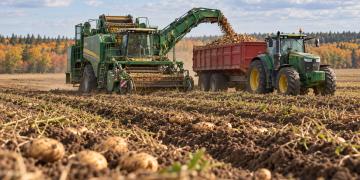
It’s a crop with significant room for technological improvement, and it is improving. Sprinkler irrigation technologies, specifically pivot irrigation, are being implemented. This has improved yields, but further work is needed.
And then, with the development of INTA (National Institute of Agricultural Technology), the incorporation of Andean potatoes as another viable alternative, which is currently marginal compared to the other three types of production, but has great potential. Ultimately, the native potato program is what has been creating opportunities for all the links in the potato sector to come together and strengthen each other.
—Is there support from the public sector?
—Yes, since last year, when they noticed the increase in exports. And they are thinking of forming a potato cluster, like the one that already exists for other crops in the province. It’s something that’s already being discussed.
Currently, quinoa and Andean potatoes are underutilized crops in Argentina. According to the latest National Agricultural Census (CNA) from 2018, quinoa represents 0.01% of the total area cultivated with cereals in the country, with approximately 760 hectares.
Compared to the main provincial crops, the area cultivated with quinoa in Argentina is equivalent to 0.005% of the land dedicated to grape cultivation and 0.02% of the area cultivated with vegetables in Mendoza. Andean potatoes are not listed in the National Agricultural Census (CNA).
Trials framed within the strategies of INTA and Conicet for the selection, management and development of new varieties demonstrate a high adaptive capacity of these two crops for the Andean valleys of central-western Argentina.
Both crops have a high potential for industrialization, and in the particular case of quinoa, increasing local production would help to reduce the importation of this food.
Fuente: losandes.com.ar