
Brazil: Potato prices fall for the third consecutive week
The supply is expected to increase even further in the coming weeks.
This week (July 20-24), prices for Agata type specialty potatoes averaged R$ 58.07/25kg sack (-20.54%) in the São Paulo wholesale market, R$ 56.77/sack in Rio de Janeiro (-13.65%) and R$ 52.65/sack in Belo Horizonte (-16.54%).
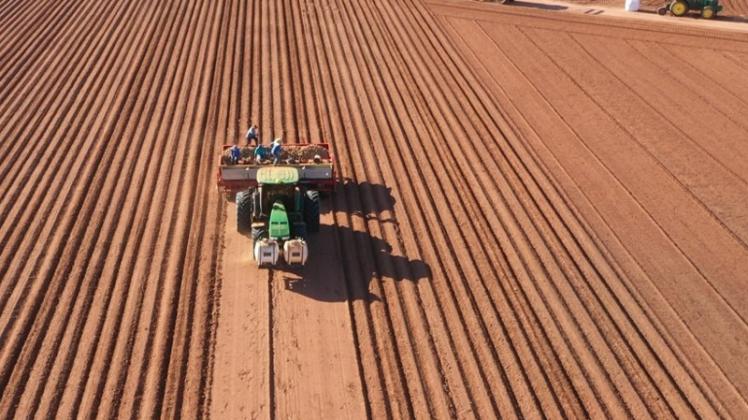
The decline in prices across all wholesale markets continues due to the intensification of the winter harvest – which has not yet reached its peak production – and the improvement in productivity.
In the São Paulo market, wholesalers reported that the potatoes offered are mostly of good quality, with a high supply, primarily from Vargem Grande do Sul. In the Rio de Janeiro wholesale market, the main supplier has been southern Minas Gerais. In Belo Horizonte, there is also a surplus of potatoes due to increased supply from the Triângulo Mineiro and Cristalina regions.
Furthermore, wholesalers report that demand remains weak, as in previous weeks, due to the school holidays. Supply is expected to increase further in the coming weeks.
Concern about prices
The Center for Advanced Studies in Applied Economics (Cepea) had already warned in the weeks leading up to the harvest that the early start of the winter crop would increase the national supply and could put pressure on prices. This prediction began to materialize with the gradual entry of production from São Paulo, although the market is still showing equilibrium due to the initial volume of the harvest.
The concern is justified by the results of the 2025 harvest. Last year, oversupply in several producing regions caused a sharp drop in prices, leading many farmers to sell potatoes below the cost of production. On many farms, the income earned was insufficient to cover expenses for seeds, fertilizers, pesticides, fuel, irrigation, packaging, and labor.
This situation led many producers to reduce investments and adopt a more cautious approach to planning for the current harvest. Even so, the activity remained important to the economy of Vargem Grande do Sul, boosting the entire local agro-industrial chain, from input suppliers and agricultural workshops to transporters, processors, traders, and seasonal workers hired for the harvest.
Experts point out that potatoes are among the vegetables with the most volatile prices in the country. As a highly perishable product, small variations in supply often lead to significant price fluctuations. This means that a technically excellent harvest does not always translate into good profitability for the farmer.
Although Cepea does not publish an official estimate of the cultivated area in Vargem Grande do Sul, the municipality remains among the most important potato-producing regions in Brazil, supplying wholesale centers such as CEAGESP in São Paulo, as well as markets in Belo Horizonte, Rio de Janeiro and other important consumption centers.
In addition to market behavior, production costs remain high. Agricultural inputs, certified seeds, fertilizers, pesticides, electricity for irrigation, and fuel continue to put pressure on farm budgets. Therefore, the economic sustainability of the activity will depend not only on good crop yields but primarily on maintaining prices that compensate the producer for their investment.
In the coming weeks, as the harvest intensifies, the market should indicate whether 2026 will indeed represent the recovery the sector has been hoping for. If domestic supply remains balanced with demand, producers will finally be able to recoup some of the losses accumulated in the last cycle and restore greater stability to an activity that for decades has made Vargem Grande do Sul one of the leading potato
Fuente: hfbrasil.org.br/gazetavg.com.br


