Italy: Quarantine bacteria found in potatoes in Calabria.
According to the EPPO, the discovery took place during official checks of potatoes intended for consumption in the province of Cosenza, which again puts the focus on phytosanitary surveillance within the supply chain.
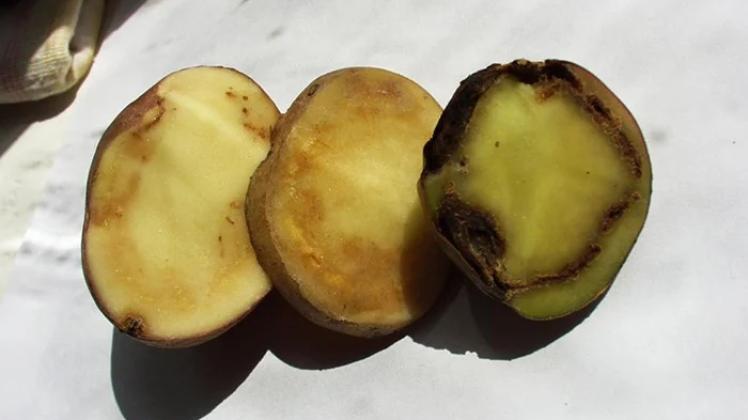
A recent phytosanitary report has raised concerns about the reappearance of Clavibacter sepedonicus, the bacterium responsible for ring rot, in the potato supply chain. Following two positive cases in 2008, the discovery in Calabria in 2026 marks the return of this bacterium to Italian phytosanitary reports. In this instance, the microorganism was detected in apparently healthy tubers during official inspections of potato storage facilities in the province of Cosenza. This situation underscores that surveillance cannot rely solely on visual inspections.
According to EPPO, the Italian National Plant Protection Organization reported in March 2026 the discovery of Clavibacter sepedonicus in potatoes stored in Cosenza, Calabria. During inspections, twenty samples, each consisting of 200 asymptomatic tubers, were analyzed, and the bacterium was identified in two of them using molecular analysis.
What was found in Calabria? Following the positive result, measures were implemented to eradicate the bacteria, including the destruction of affected potatoes and the disinfection of machinery and facilities where infected tubers were found. Clavibacter sepedonicus has been officially declared present in Italy.
This report does not suggest widespread transmission, but rather serves as a warning for the entire supply chain. Detection in asymptomatic tubers underscores the importance of official controls and hygiene procedures throughout product handling and storage.
Why is this bacterium problematic? Clavibacter sepedonicus causes ring rot, affecting the vascular system of plants and causing symptoms on leaves and tubers. Signs may include wilting and necrosis, but these can be confused with other diseases or water stress, complicating diagnosis based solely on observation.
In tubers, it can cause vascular ring damage and internal rot; however, some infections may be latent. This critical aspect requires laboratory analysis to detect the bacteria.
The spread of Clavibacter sepedonicus is linked to the handling of infected tubers and the contamination of surfaces and equipment. The stages from harvest to storage are vulnerable, as contact with contaminated materials facilitates its transmission.
Therefore, risk management also includes warehouses and rigorous cleaning. The presence of asymptomatic tubers confirms that surveillance must cover the entire supply chain.
Rapid action is required because, in Europe, Clavibacter sepedonicus is subject to specific regulations to prevent its spread. Control is not achieved through standard curative measures, but rather through the destruction of contaminated material and rigorous monitoring.
The discovery in Calabria has significant phytosanitary implications. The presence of bacteria in asymptomatic tubers demonstrates the difficulty of detecting the problem early, underscoring the importance of maintaining active controls.
This case once again highlights Clavibacter sepedonicus as a central issue for national plant health, reaffirming the priority of continuous prevention and surveillance.
Fuente: fruitjournal.com