Chile: Chilean scientists develop a potato variety that takes longer to oxidize after being cut
The advance would allow for a reduction in post-harvest waste and an improvement in product quality without incorporating DNA from other organisms.
Scientists at the National Institute of Agricultural Research (INIA) have achieved a remarkable breakthrough that directly impacts food security and agricultural sustainability. They have developed a potato that takes much longer to oxidize once peeled and cut, an essential characteristic for reducing food waste.
A study published in the scientific journal *Agronomy* details how Chilean researchers implemented precise genome editing techniques to improve this key global crop, without incorporating DNA from other species, thus ensuring that it is not a transgenic product.
A step towards longer lifespan and less waste
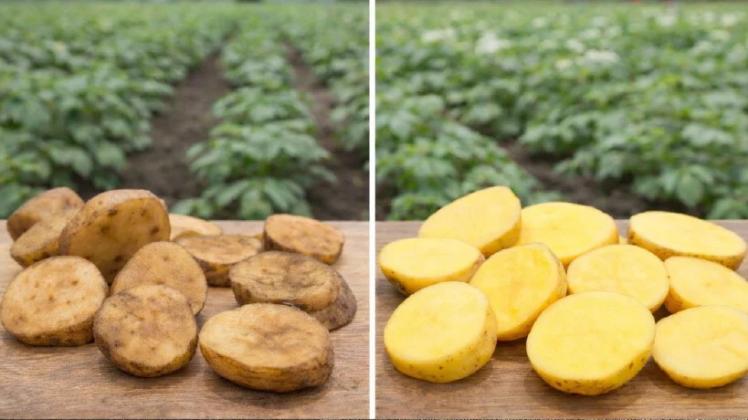
Oxidation, responsible for the dark color that appears on potatoes after cutting, is caused by the action of the enzyme polyphenol oxidase (PPO). This process negatively affects both the appearance and quality of the product, resulting in significant post-harvest losses. To address this problem, scientists worked with the Chilean variety Yagana-INIA using CRISPR-Cas9 technology. Their goal was to edit the StPPO2 gene, one of the most active in tubers and directly associated with oxidation. As a result, they obtained an edited potato line that showed a notable reduction in browning compared to unmodified potatoes.
The study details that, after 24 hours from the cut, the conventional potatoes showed an evident darkening, while the edited lines showed hardly any changes, thus confirming the success of the genetic intervention.
Non-GMO genome editing technology
Unlike traditional genetically modified crops, this development used genome editing, a technique that modifies the plant’s own genes without introducing external DNA. Analyses showed that the developed lines do not contain Cas9 sequences or other transgenes, complying with Chilean regulations to classify this product as non-GMO. Even a single allelic modification (despite the potato being a tetraploid organism) was sufficient to significantly reduce the enzymatic activity that causes oxidation.
Towards sustainable agriculture
With potatoes being one of the most important staple foods and also one of the most prone to post-harvest losses worldwide, extending their shelf life could have a significant impact on reducing food waste at both the domestic and industrial levels.
According to Miguel Ángel Sánchez, executive director of ChileBio, this advance demonstrates Chile’s scientific and technological potential to address agricultural challenges through innovation and biotechnology. He also emphasized that gene editing represents a key tool for promoting more sustainable and efficient food systems.
Projection for the future of agriculture
In their conclusions, the INIA team emphasizes that this work establishes a viable technical and regulatory model for improving vegetatively propagated crops such as potatoes, without resorting to genetically modified organisms (GMOs). The resulting line constitutes a promising prototype with great potential for both plant breeding programs and its direct application in Chilean production systems. These advances position the country as a leader in agricultural biotechnology in Latin America, paving the way for more innovative and sustainable agriculture.
Fuente: 24horas.cl