Chile (La Araucaria): The Zero Footprint Potato project aims to reduce agrochemicals in potato crops
The initiative, promoted by INIA Carillanca and financed by FIA, will be developed over three years, collaborating with farmers and municipalities to promote agroecological practices in the most representative potato-producing communes.

Coinciding with the commemoration of International Potato Day, on May 30th the project “Zero Footprint Potato: agroecological transition protocol for potato production systems” was presented in La Araucanía, an initiative that aims to reduce the use of agrochemicals in one of the most important crops of regional agriculture.
The project is being implemented by the INIA Carillanca Agricultural Research Institute and is funded by the Foundation for Agrarian Innovation (FIA). Its execution will last 36 months and involves an investment of $147 million.
I work with producers and municipalities
The project will be developed at the INIA Tranapuente Regional Potato Center and will cover the communes of Carahue, Saavedra, Toltén, Teodoro Schmidt, Gorbea, Nueva Imperial and Freire, territories linked to the Tranapuente Agreement.
The initiative will be led by extension researchers Patricio Méndez Leal and Claudia Osorio Ulloa, along with their technical teams.
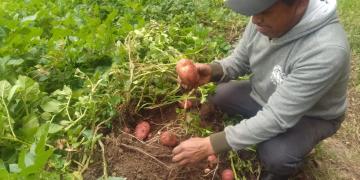
See moreHorticultureFruits and vegetablesAgricultural management softwareOne of the central aspects will be working directly with farmers and municipal professionals to implement agroecological transition protocols in real production conditions, seeking to reduce dependence on phytosanitary products without affecting crop yields.
Environmental impact assessment
During the launch, the Regional Secretary of Agriculture for La Araucanía, María Teresa Fernández, highlighted the initiative’s contribution to bringing science and technology closer to the productive sector: “We value this project, as it strongly strengthens the third strategic pillar of our ministry, aimed at encouraging productive modernization. This means prioritizing the incorporation of science and technology into the productive sector, with a focus on effective transfer to stakeholders, improving their productivity and competitiveness. Here, a virtuous cycle exists among different entities that strengthens such an important sector as potatoes.”
For his part, FIA’s Executive Director, Andrés Galmez, highlighted the tools the project will provide to producers: “Zero Footprint Potato represents a meaningful innovation for agriculture in La Araucanía, as it provides concrete tools for more sustainable, efficient, and responsible production. This initiative will allow us to measure the environmental impact of pesticide use, strengthen on-the-ground capabilities, and support producers in their decision-making. At FIA, we value this collaborative work that unites science, technology, and the land, moving towards a more resilient and modern agriculture focused on small-scale farming.”
Potato cultivation requires ongoing pest and disease management due to the presence of pests and diseases. This has historically led to the intensive use of agrochemicals in many production systems.
To address this scenario, the project will incorporate the international Environmental Impact Coefficient (EIQ) methodology, a tool that allows measuring the potential risks of phytosanitary products on agricultural workers, consumers, biodiversity and natural resources.
Mobile app and 200 driving plans
The regional director of INIA Carillanca, Fernando Ortega, explained that the methodology will allow for the development of more sustainable management strategies: “Based on this methodology, sustainable management plans will be developed to optimize disease control decisions, reduce dependence on agrochemicals, and maintain crop productivity levels. This is a new step forward for farmers participating in the Tranapuente Agreement, a public-private partnership that has yielded positive results over the years and has strengthened the potato sector, as well as positively impacting the lives of many producers.”
Among the project’s main goals is the implementation of 200 agroecological management plans on potato farms in the region. It also includes the application of the EIQ methodology to real-world production systems, the development of a mobile application for technical support, and the validation of protocols in collaboration with farmers and municipal teams.
In addition, technology transfer and dissemination activities will be carried out to promote the use of digital tools and environmental criteria in crop management.
The implementers hope that the initiative will help reduce the environmental and health impacts associated with the intensive use of agrochemicals, while maintaining the competitiveness of regional potato production and strengthening the sector’s adaptation to the challenges of climate change.
Fuente: reporteagricola.cl