Europe: "Proper contracting and planning of production is key to ensuring the survival of the potato sector."
Prices are no longer determined locally, not even within Europe. Currently, global demand and the food industry itself dictate both prices and contract terms, Sáenz de Cámara points out.
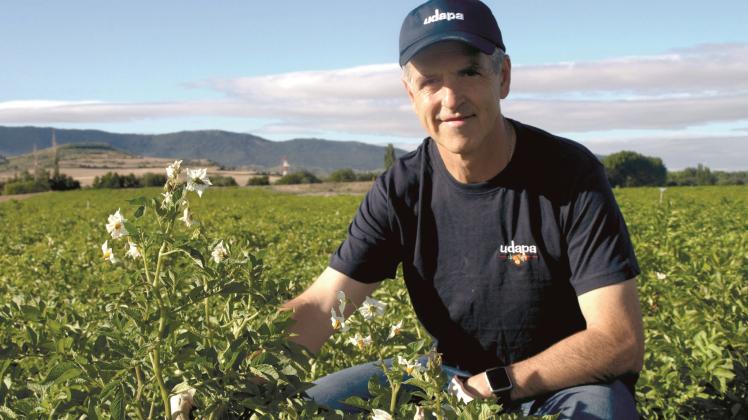
This paradigm shift is forcing the sector to strengthen its planning to ensure the viability of farms. “Contracting and planning production is essential for the sector’s survival,” emphasizes Alfonso Sáenz de Cámara, deputy director of UDAPA.
“Prices are no longer decided at the local level, or even at the European level. Now it is global needs and the food industry itself that determine prices and contractual conditions,” explains Sáenz de Cámara.
The weather has had a major impact on the start of the 2026 growing season. Storms in recent weeks have delayed early potato planting in Andalusia by up to a month and a half, reducing product availability in May and June. In Murcia, the impact has been different, with wind affecting the yield of numerous early-planted fields. Meanwhile, in Castile and León, planting difficulties are expected to result in a 15% reduction in the cultivated area compared to last year.
The result is a scenario of tight supply at key times during the summer. “Everything indicates that on certain dates we will have a shortage of product, which will drive up prices at the source,” notes the deputy director of UDAPA.
See morePope NewsCentral Market QuotationAgricultural regulationsOne of the structural problems of previous seasons, the seed shortage, appears to be a thing of the past. After the difficulties stemming from the poor harvest of 2022, the sector has managed to regain its footing.
The rise of the processed potato
The consumption of processed products, driven by changes in consumption habits and the growth of the Horeca channel, continues to rise. However, Sáenz de Cámara warns that this segment is not without risks. “Although processed potatoes seem to have a lot of potential, they also present challenges and don’t necessarily maintain their value better,” he states.
Adding to this uncertainty is the increase in production costs. The rising price of fuel and fertilizers, with increases of nearly 35%, is once again putting pressure on profit margins both in the fields and in the processing industry. “I fear that 2026 is going to be a difficult year to manage,” he admits.
Generational change and certified seed
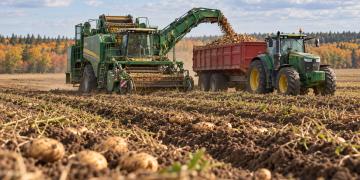
Faced with this new environment, business strategies are also evolving. UDAPA is committed to strengthening its local production base and adjusting harvest schedules. Traditionally focused on late-season crops, the cooperative has been progressively bringing forward its harvests. “It’s already common to harvest new potatoes in Álava in August, and this year we expect to harvest a significant portion before September thanks to the use of earlier varieties,” explains the manager.
In this context, UDAPA remains committed to strengthening the production of certified seed potatoes and attracting new farmers. The cooperative managed to maintain 350 hectares of its own crops in the last season thanks to the addition of young producers, and plans to increase this area in 2026.
See moreFrost protection for cropsPotato ClassifiedsInternational potato pricesFurthermore, the organization is making progress on the construction of a new facility for the reception, selection, and storage of certified seed. “We expect it to be operational for the next harvest season and to become a fundamental pillar for boosting local production,” concludes Sáenz de Cámara.
Fuente: revistamercados.com