
Peru: Two 500-year-old popes that survived the fall of the Inca Empire have been discovered.
The discovery occurred during the 2024 field season.
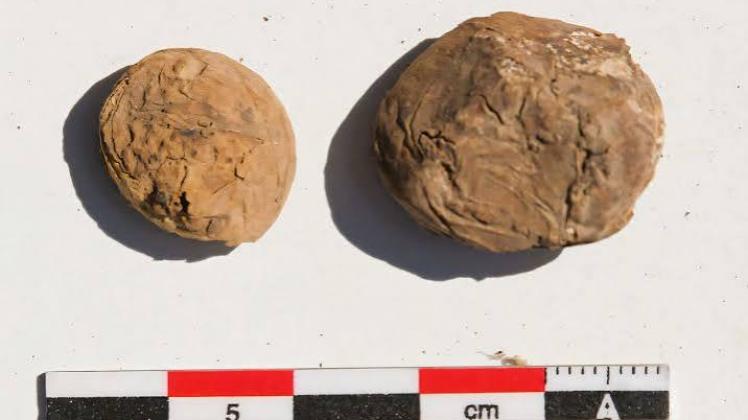
The discovery of two pieces of potato in an approximately 500-year-old Inca warehouse in Peru represents a remarkable find: freeze-dried potatoes, predating the arrival of the Spanish, according to a recent study. Horticulture
These freeze-dried potatoes, known as chuño, were essential to the diet of the Inca Empire. Their fragile nature means they are rarely found at archaeological sites.
This discovery on the southern coast of Peru is only the second time chuño has been found at an Inca site, according to the researchers. It demonstrates that the empire used to transport one of its key foodstuffs from the Andes to the Pacific Ocean, hundreds of kilometers away.
Chuño is produced by subjecting potatoes to nighttime freezing and daytime sun exposure until almost all their moisture is removed, resulting in a light and durable food that can be preserved for decades. This technique is only viable in high-altitude regions where frosts are frequent, so it had to be produced in the mountains and then transported by llama caravans over long distances to feed other areas of the empire. Horticulture
The Incas used the same drying method to preserve meat, creating "charki," the precursor to the English term "jerky." This was explained by Lidio Valdez, lead researcher of the study and adjunct professor at the University of Calgary.
In the study published on May 1 in the Journal of Field Archaeology, Valdez and Katrina Bettcher, an independent archaeologist, reported that the chuño appeared along with a fragment of Inca pottery and a broken spindle used for spinning fibers.
The discovery occurred during the 2024 field season in Tambo Viejo, a provincial center in the Acarí Valley, where the team had worked for several years. Inside a small storage building, they unearthed a partially submerged clay pot. Upon removing the soil, they found the freeze-dried potatoes near the bottom. Horticulture
“We found the two samples almost at the bottom of the container,” Valdez said. “When they showed them to me, I knew immediately that it was chuño.”
Potatoes contain 80% water and decompose rapidly at low, warm altitudes, making them unsuitable for long-term storage. Valdez suggested that freeze-drying was likely discovered before the rise of the Inca Empire in the 15th century, when potatoes exposed to frost remained edible.
Since chuño can only be produced at altitudes above 3,600 meters, the samples found in Tambo Viejo must have traveled from the highlands by llama caravans, Valdez commented.
"The lightness of the chuño also facilitated its transport," he added.
The two freeze-dried potatoes were preserved thanks to the extremely dry conditions of the Acarí Valley, which help preserve organic remains; the same conditions that made it possible to find naturally mummified guinea pigs in Valdez’s previous work.
Beyond its archaeological significance, this ancient preservation method offers valuable lessons for the present. "We still have much to learn from the past," Valdez stated. "Food security is a constant concern; however, we are wasting more food than ever before."
Few Inca sites have been excavated along the Peruvian coast so far. Valdez hopes that this type of evidence and supply routes will emerge with future archaeological investigations.
Fuente: infobae.com


