Innovations: Catalan researchers develop a modified bacterium capable of transforming potatoes into biodegradable plastic in just 24 hours.
The new technology makes it possible to manufacture sustainable bioplastics from potato starch, an alternative that could help reduce dependence on oil and pollution from plastic waste.
Hundreds of millions of tons of petroleum-derived plastic are produced worldwide each year. Some of it ends up accumulating in terrestrial and marine ecosystems, while some is burned, emitting greenhouse gases. Faced with this serious environmental problem, a team from the University of Barcelona has developed a technology that could facilitate the production of much more sustainable plastics.
Researchers have succeeded in producing a biodegradable bioplastic from raw potato starch using a modified version of a bacterium widely used in biotechnology. The process takes only 24 hours and is done in a single step, a fact that could facilitate its future industrial application.
A bacterium turned into a small bioplastic factory
The key to the research is the bacterium Bacillus subtilis, a microorganism considered safe and commonly used in many industrial processes. Using genetic engineering techniques, scientists have modified its metabolism so that it can produce large quantities of polyhydroxybutyrate (PHB), a biodegradable material that can replace some conventional plastics.
Until now, this bacterium had a limited capacity to produce PHB. With the modifications introduced by the researchers, the yield has increased significantly, making it a much more efficient platform for bioplastics production.
From agricultural waste to raw material
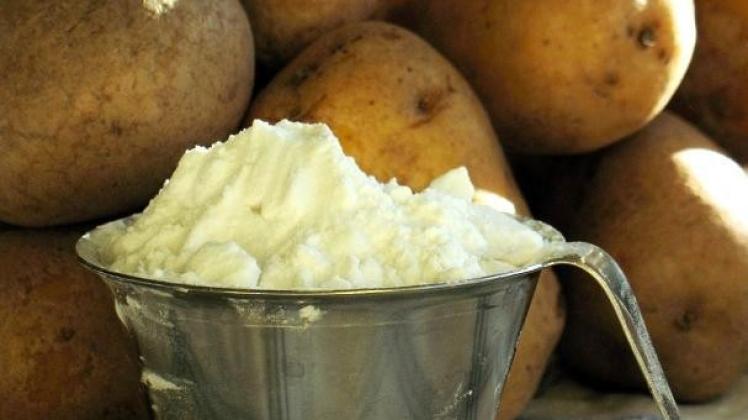
One of the most interesting aspects of the study is that the raw material used is unprocessed potato starch, an abundant and inexpensive agricultural byproduct. The researchers introduced a gene into the bacteria that produces an enzyme capable of directly degrading this starch. This allows the microorganism to transform the potato into bioplastic without the need for complex pre-processing.
In laboratory tests, the system achieved a material with a quality comparable to current commercial standards, which reinforces its industrial potential.
Why is this plastic different?
PHB belongs to a family of biopolymers produced naturally by certain microorganisms. Unlike petroleum-based plastics, it is biodegradable and derived from renewable resources. This means that once its useful life is over, it does not tend to accumulate in the environment for decades or centuries in the same way as many conventional plastics.
Several studies suggest that it can also have a lower carbon footprint, especially when manufactured from agricultural waste or by-products.
A step towards a more circular economy. The researchers believe this technology exemplifies how biotechnology can transform an environmental problem into an economic opportunity. The ultimate goal is to harness low-cost, renewable resources to produce useful materials without relying on fossil fuels.
It remains to be seen how the process will work on a large scale, but the results open the door to a new generation of more sustainable plastics made from resources that previously had little added value. In a context marked by the plastic waste crisis and the need to decarbonize industry, initiatives like this show that alternatives are no longer just a laboratory idea, but an increasingly real possibility.
Fuente: lavanguardia.com