Vietnam: Potential for potato cultivation
The establishment of raw material production zones connected to processing industries is emerging as a significant trend in efforts to promote sustainable agricultural development and adapt to climate change.
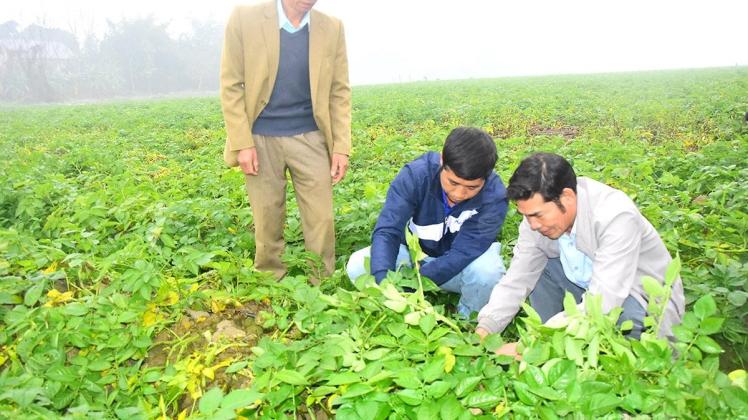
The FL2215 potato production linkage model has been implemented for many years in the northern provinces by PepsiCo Vietnam Food Company in collaboration with Viettrans Logistics Joint Stock Company to establish a stable supply zone for raw potatoes for processing. Since the PepsiCo factory in Ninh Binh began operations, the demand for raw potatoes for processing has increased considerably. This has prompted the companies to expand their production links with farmers in many locations.
In Tuyen Quang , this is the second year the model has been implemented. For the 2025-2026 winter-spring growing season, Viettrans Logistics Joint Stock Company is collaborating with farmers in An Tuong District and Ngoc Duong Commune to cultivate over 22 hectares of the FL2215 potato variety, a high-yield, uniform-sized variety specifically for industrial processing. The Dong Tham Plant and Animal Breeding Center in An Tuong District is the main organizer, managing 17 hectares of the project, while Ngoc Duong Commune is contributing 5 hectares.
Companies supply seeds and fertilizers and transfer planting, care, and harvesting techniques, also committing to purchase all harvested products. This value chain model, from inputs to consumption, helps farmers achieve greater production security and reduces market risks.
Mr. Dao Van Manh, Director of Viettrans Logistics Joint Stock Company, stated: “The key to the joint stock model for potato production lies in the company’s commitment to purchasing all products at a stable price directly from the field. This gives farmers the security to invest in production while ensuring a consistent supply of raw materials for the processing plant. This model not only proactively helps secure the supply of raw materials for the new factory in Ninh Binh, but also drives the modernization of the agricultural sector, reduces environmental impact, and aligns with the green development strategy,” Mr. Manh shared.
Potatoes take root in the soil.
A key feature of the model is that the entire production process is organized in a modern and environmentally friendly manner. In the potato fields of the Dong Tham Plant and Animal Breeding Center, all stages of land preparation, plowing, planting, and care are mechanized using specialized machinery. The application of mechanization significantly reduces labor costs while improving production efficiency.
In addition, the company has relocated and installed an automated drip irrigation system throughout the production area. This system allows for the precise distribution of water and nutrients according to each stage of crop growth, which helps to save irrigation water, reduce fertilizer loss, and minimize environmental impact.
Mr. Hoang Duc Hoanh, director of the Dong Tham Plant and Animal Breeding Center, stated, “The application of science and technology has significantly transformed production methods. Previously, many stages of production were mainly done manually, resulting in low productivity. With mechanization and synchronization of technical processes, potato plants grow uniformly, pests and diseases are reduced, and the amount of pesticides used in the fields decreases. This is also an important factor contributing to the creation of an environmentally friendly and sustainable raw material production area.”
Beyond simply transferring technology, companies are gradually integrating digital technology into production management. Farmers are being trained to use drones to inspect fields, monitor crop growth, manage planting schedules, and adjust irrigation levels directly from their smartphones.
After more than three months of planting and cultivating the potatoes according to proper technical procedures, the harvest has been completed in An Tuong district and Ngoc Duong commune. The results show an average yield of approximately 28 tons per hectare. With a field price of between 7,500 and 8,000 VND/kg, as stipulated in the contract, and after deducting production costs, each hectare of potatoes generates a profit of between 50 and 60 million VND.
In the commune of Ngoc Duong, the community is participating in a 5-hectare integrated farming model of the FL2215 potato variety. Many families are bravely transforming their traditional farmland for potato cultivation, in collaboration with companies.
Ms. Nong Thi Duong, from Na Xa Village, Ngoc Duong Commune, commented that her family participated in the program with a plot of over 1,000 square meters. Previously, her family mainly cultivated traditional crops, but profitability was low and the market unstable. By participating in the cooperative potato farming model, they received systematic technical guidance, and the company guaranteed the purchase of their entire harvest, providing them with much-needed security. “Thanks to the technical training and regular follow-up from the staff, the potato plants are developing well. The yield is as expected, and the income from selling potatoes is higher than from previous crops,” Ms. Duong shared.
According to Mr. Nguyen Kim Hanh, Director of Agronomy at PepsiCo Vietnam Food Company Limited: “Establishing a stable raw material supply zone is crucial for the agri-food industry. Our goal is to develop a sustainable potato growing area in the northern provinces, and Tuyen Quang has favorable soil and climate conditions. The company is committed to supporting farmers from production to consumption to ensure mutual benefits. Furthermore, the application of digital technology in agriculture helps improve field management efficiency, reduce costs, and minimize negative environmental impact.”
For Tuyen Quang, the initial results of the FL2215 potato model demonstrate the potential for developing raw material cultivation areas destined for processing in the coming years. Given the growing demand for raw materials for the processing industry, expanding production linkage models with businesses will be crucial for increasing the value of agricultural products. This also lays the foundation for Tuyen Quang’s agricultural sector to gradually achieve greater sustainability in its cultivation areas, develop sustainable production, and increase the population’s income.
Fuente: vietnam.vn