Brazil: Extreme heat and La Niña pose a challenge to the potato agribusiness in 2026
Brazilian agribusiness begins its planning for the summer of 2026 with a new climate alert: a markedly hot period is predicted.
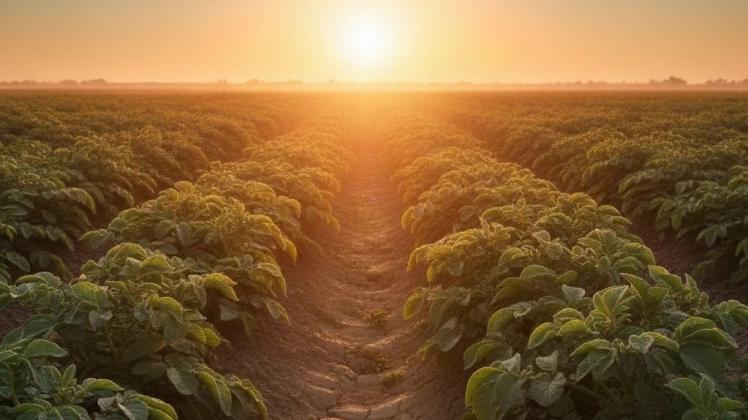
According to information from Meteored , even with the declaration of La Niña, the phenomenon is expected to have little influence on the country’s weather conditions during the January-March quarter.
The analysis indicates that La Niña is in a weak phase and has an expiration date, with projections indicating its end between January and March due to significant ocean warming. Therefore, the determining factor for the season will be the clear trend of above-average heat in practically all regions, with the most intense temperature anomalies in Rio Grande do Sul and parts of the Northeast. This scenario, coupled with the expectation of near-average (or even slightly reduced) rainfall in the south, creates an environment of high alert for the agricultural sector.
See moreAgricultural machineryPrice variationPotato seedsAgricultural work clothesLogistics servicesCentral Market of Buenos AiresWholesale pricesHarvest productsInternational potato pricesAgricultural market studiesThe risks of a hot summer for crops.
The predominance of high temperatures, combined with a tendency for rainfall to be close to the average (or even slightly reduced in the south), creates an environment conducive to water and heat stress in crops.
- Productivity losses: Crops sensitive to heat and water scarcity, especially during critical developmental stages such as flowering and grain filling, can suffer significant productivity losses. Cereals such as soybeans and corn, and perennial plants such as coffee and citrus, are particularly vulnerable to flower abortion and reduced yield potential under extreme heat conditions.
- Irregular rainfall and atmospheric blocking: Meteored indicates that stable temperatures in the South Atlantic could reduce the availability of moisture and energy for the formation of rain systems, favoring the appearance of atmospheric blocking patterns. These blocking patterns act as "plugs" in the atmosphere, concentrating heat and hindering the arrival of cold fronts and widespread rainfall, thus increasing the irregularity of precipitation.
- High water demand: Intense heat increases the rate of evapotranspiration, which in turn increases the water demand of plants and soil. Even with average rainfall, high temperatures can negate the benefits of precipitation, requiring more efficient irrigation systems.
Weak La Niña: Uncertain Regional Variations
Despite being a weak La Niña phenomenon that is expected to end between January and March, its traditional regional effects deserve attention:
- Southern Region: The main concern lies in the south, where La Niña, even a weak one, could cause a slight reduction in rainfall during an already hot summer. The combination of lower rainfall and extreme heat poses a high risk to cereal crops in the region.
- Northern Region: The trend is towards a slight increase in rainfall, a scenario that, in excess, can also generate logistical problems and delays in harvests.
- Central-West and Southeast: These regions tend to remain in near-normal rainfall conditions, but above-average heat will be the main stress factor.
Focused risk: Potatoes under heat stress in summer.
Potato cultivation is highly sensitive to extreme heat, and rising temperatures are one of the biggest challenges for summer crops in Brazil. Optimal development, particularly tuberization (potato formation), occurs at relatively low soil temperatures.
See moreVarieties of papaCentral Market of Buenos AiresOnion pricesSoil analysisFertilizersAdvertising on ArgenpapaSolanum tuberosumRecipes with potatoesPotato regulationsInternational potato pricesThe above-average heat scenario projected by Meteored poses a significant risk. Elevated temperatures in the root zone inhibit tuberization and, if sustained, can lead to a significant reduction in productivity, resulting in fewer tubers and a decrease in average size. Furthermore, heat stress often causes defects and unevenness in the crop. Examples include physiological problems such as "cigar tip" (undesirable secondary growth) and other disorders that ultimately compromise the quality and final commercial value of the product.
To make matters worse, the heat and erratic humidity favor an increase in fungal and bacterial diseases, requiring more rigorous and costly pest and disease control. Therefore, for potato growers, the summer of 2026 will demand even more meticulous management of irrigation and soil cover to mitigate heat in the root zone and ensure crop health.
Adaptation strategies for the agro-industry.
Given this scenario of a hot summer and uncertain rainfall, the key messages in agribusiness are adaptation and technology.
It is crucial that rural producers adopt Regionalized Monitoring and Planning. This involves closely following short-term forecasts, adjusting planting schedules and management practices to the microclimatic conditions of their municipality, as already recommended by the Meteored analysis.
Smart water management is becoming essential to combat water stress caused by heat. In this context, investing in precision agriculture technologies to optimize water use, such as soil moisture monitoring and efficient irrigation systems, is an indispensable step.
Finally, cultivar technology represents a long-term strategy that minimizes climate risks. Choosing cultivars that are more tolerant to heat and drought is an essential preventative measure.
Therefore, the summer of 2026 will test the resilience of Brazilian agribusiness. Efficient management of the risks associated with extreme heat will be the determining factor in ensuring crop productivity and sustainability.
Fuente: abbin.org