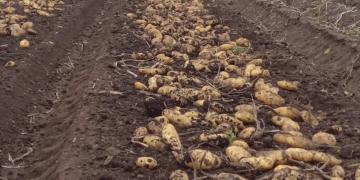
Colombia: They develop a native potato variety that extends storage time and reduces losses in the field
Natural genetic crosses between Colombian and Peruvian varieties allowed for extending the sprouting time of the criolla potato, one of the most produced and consumed in the country.

The native potato, one of Colombia’s most representative agricultural products, could have a new ally in addressing one of its main problems: the short time it takes to sprout after harvest. Research led by the National University of Colombia has developed a new type of this tuber capable of preserving its flavor, color, and quality for more than a month in storage.
The breakthrough was achieved through controlled genetic crosses between Colombian native potato varieties and an ancestral Peruvian lineage, which doubled the dormancy period before sprouting. This result opens up a concrete possibility for reducing post-harvest losses and expanding the market for producers, without resorting to genetically modified organisms.
See moreLogistics servicesTrips to agricultural fairsPotato linksWeather forecastPotato pricespotatotableInternational potato pricesPlant protection productsVarieties of papaWhy is a native potato variety that takes longer to sprout key for Colombian agriculture?
In potatoes, sprouting marks the beginning of a new plant, a useful process for planting, but detrimental when it occurs too rapidly in tubers intended for consumption. In native potatoes, this phenomenon appears in just a few days, affecting their texture, size, color, and flavor, which limits their marketability and, in many cases, forces them to be discarded.
Unlike other varieties such as Sabanera or Pastusa, which can be stored for several months, the Creole potato has a very short dormancy period. To address this challenge, Luisa Fernanda Castro Morales, an agronomist with a master’s degree in Agricultural Sciences, explored the crop’s genetics and found an alternative in the Stenotomum group, a Peruvian lineage with thousands of years of domestication and recognized for its resistance to prolonged sprouting.
The study involved the manual crossbreeding of three Colombian varieties with three Peruvian varieties in a controlled natural reproduction process. The resulting plants were evaluated at the ICA San Jorge Farm in Soacha (Cundinamarca), where their performance was measured under real growing conditions. The results showed not only an increase of nearly 30% in yield, but also the ability to remain dormant for up to 48 days after harvest.
The research also incorporated genetic analysis tools and technical adjustments to optimize crossbreeding and avoid losses associated with factors such as shade, which directly impacts crop productivity. The approach aims to offer, in the medium term, a more efficient variety for storage and marketing, without altering the nature of the product.
Fuente: extrategiamedios.com